AI versus Human Intelligence in Career Strategy

Oxford Executive CV Writer
AI can produce impressive language at speed, but it cannot replicate the scars of human responsibility, the experience of unexpected change, or the judgement forged in organisations where behaviour is rarely neat, fully informed, or entirely rational. In an executive market flooded with polished sameness, lived judgement, proven outcomes, and the ability to navigate real-world complexity are becoming more valuable, not less. This is a moment for deliberate career strategy, not anxiety about being sidelined.

Why this matters now

If you are worried that AI is making your experience look less distinctive, you are not imagining the shift. Generic competence is becoming easier to imitate. What still stands apart is judgement under pressure, commercial instinct, political awareness, and the ability to make sound decisions when the facts are incomplete. Read on if you need to position yourself for a market that now rewards proof, relevance, and adaptability more sharply than before.

The threat is not AI alone. The bigger risk is presenting hard-won executive value in language so generic that it sounds machine-made.

Why experienced executives are still needed

  • Routine thinking versus real responsibility - AI can summarise, draft, compare, and accelerate routine thinking. That changes the market, but it does not remove the need for senior people who can absorb ambiguity, challenge assumptions, read risk, and take responsibility for difficult calls.
  • What employers are actually buying - Boards and employers do not appoint executives simply to produce tidy output. They appoint them to make sense of complexity, weigh competing interests, and decide what to do when the stakes are real.
  • Where human intelligence still matters most - Human intelligence at senior level sits in judgement, not just knowledge. It also reveals itself in original thinking, lateral thinking, and creativity, alongside timing, restraint, pattern recognition, stakeholder reading, and the ability to sense when a neat plan will fail in execution.
  • What AI still cannot replicate - AI may support those processes, but it has not sat in the room during a failing transformation, a regulatory scare, a board conflict, a cultural breakdown, or a reputational threat.

The real differentiator: the scars of real life

The scars of real life are the experiences that change how you lead. They come from carrying consequences, not from studying them. They include the merger that looked sensible on paper but triggered resistance, the restructuring that required judgement as well as resolve, the turnaround that demanded credibility in a frightened organisation, or the major initiative that succeeded because you spotted the hidden risk early.

These experiences create value that is hard to imitate. They sharpen your sense of what matters, what is missing, and what may go wrong next. They shape your judgement about people, pace, politics, risk, and execution. In career strategy terms, that is not background detail. It is often the core of your proposition.

A machine can imitate executive language. It cannot truthfully claim to have carried responsibility through uncertainty, pressure, and consequence.
~ Elle Bradshaw

Why many strong executives are still being overlooked

  • The issue is often positioning, not capability - The problem is not always capability. More often, it is positioning, or how executive value is being framed and presented to the market.
  • Generic claims no longer differentiate - Many executives still describe themselves through broad phrases such as strategic leader, commercially astute, transformation specialist, or experienced stakeholder manager. Those claims may be true, but they are now too easy to reproduce and too weak to set you apart.
  • Employers now want sharper signals - In a market shaped by AI, employers need clearer evidence of where your judgement changed an outcome, where your experience prevented a mistake, where your leadership carried risk, and where you delivered traction in politically, operationally, or commercially difficult conditions.
  • Weak career strategy can undersell real value - A career strategy that fails to surface these forms of evidence is likely to flatten your distinction and undersell your real executive worth.

Resume, Perth, WA, Australia

Elle Bradshaw in a The Daily Telegraph article by Liz Hoggard.

Schedule an appointment

For a fifteen-minute conversation with Elle prior to purchase, please click on the telephone icon to arrange a complimentary call at a time that is mutually convenient

What career strategy must do differently now

  • Move beyond surface polish - Career strategy can no longer be a light polish exercise. It must define where your human value sits in a market where routine output is increasingly commoditised.
  • Identify the evidence of your true level - That means identifying the decisions, turning points, and high-pressure contexts that reveal your true level, then building a proposition around evidence, not adjectives.
  • Signal readiness to adapt - It also means presenting yourself as someone ready to adapt and thrive in the new paradigm. Employers do not only want experience; they want confidence that you can lead in an environment shaped by automation, faster data flows, closer scrutiny, and shifting expectations about productivity.
  • Combine judgement with adaptability - The strongest executive propositions now combine lived judgement with visible adaptability, showing not just what you have done, but how you are equipped to lead through change.
  • Show discernment, not evangelism - That does not require you to become an AI evangelist. It requires you to show that you understand the changing context, can separate useful adoption from hype, and can help organisations modernise without losing judgement, governance, or common sense.
  • Position yourself above the commoditised - The goal is not to compete with AI on speed. It is to position yourself above what can be commoditised.
The executives most at risk are not those with the least experience. They are often those whose experience is described too vaguely to carry weight in an AI-shaped market.
How should an executive respond?

Start by reassessing your proposition. Ask where your value genuinely sits now that polished drafting, surface analysis, and generic business language are widely available. The answer usually lies in judgement, commercial realism, leadership under pressure, and the scars of real responsibility.

Next, review how that value is presented. If your CV, LinkedIn profile, biography, or cover letter relies heavily on abstract leadership terms, it may be flattening your distinction. Stronger positioning shows where you changed direction, reduced risk, created confidence, stabilised a situation, or led effectively through uncertainty.

What is a strong strategy option?

One of the strongest options is to prepare a proposition that signals readiness to adapt and thrive in the new paradigm. This means presenting yourself as an executive who combines deep experience with openness to change, digital realism, and the ability to lead sensibly through technological disruption.

A proposition like this reassures employers on two fronts. First, you are not stale or defensive. Second, you are not naive about AI’s limits. You understand where automation helps, where human oversight remains critical, and where leadership still depends on judgement, trust, and consequence-bearing decisions.

The aim is not to sound more futuristic. It is to sound more relevant, more evidence-led, and more credible in the conditions employers face now.
Why tailored career strategy matters

Generic self-marketing is becoming cheaper by the day. Tailored career strategy matters because it helps define what makes you hard to replace. It identifies the experiences that prove your level, the themes that unify your career, and the evidence that best supports your relevance in a changing market.

Beyond 'technical fit'

For senior applicants, this can mean the difference between looking broadly accomplished and looking specifically valuable. The first is easy to overlook. The second is much harder to sideline.

Simply tweaking your cover letter and submitting a standard CV won't suffice for executive and board-level positions nowadays. Your entire submission must be meticulously customised to align with the job's selection criteria, which may be directly stated or require careful deduction through company research.

The Master CV

A Master CV is a strong strategic asset in an AI-shaped market, where generic polish is cheap and real differentiation depends on relevance, judgement, and strategic clarity. It creates a rigorous, comprehensive record of your career history, achievements, transferable strengths, and evidence of value, so you are not forced to invent, compress, or dilute your proposition under pressure. Instead of reacting to opportunities with a rushed, generic CV, you can respond quickly and intelligently with bespoke applications grounded in substance, aligned to explicit and unspoken selection criteria, and framed around what matters most to each employer.

A Master CV is not a document for submission, but the strategic foundation of a more intelligent executive job search, enabling sharper positioning, stronger pitches, better LinkedIn alignment, and more credible moves in a market where sameness is increasingly easy to produce.

What Is A 'Master CV'?

View this as your strategic map for standing out in a competitive field. More...

A Master CV captures all relevant experience, skills, achievements, job history, and references. It serves as an aide-mémoire and provides a strategic foundation to act quickly and decisively, enabling you to align each application precisely with an employer’s needs. This is especially valuable if you’re keeping your options open or considering a move into a different sector.

What Is a Master CV?

A Master CV serves as a comprehensive repository of your entire professional history, skills, and achievements. It is a living document that is never submitted to employers directly but instead acts as a reference for creating bespoke CVs suited to specific roles. By keeping all relevant details in one place, it ensures that no valuable information is overlooked when preparing applications, LinkedIn profiles, or capability statements.

Why Have a Master CV?

  • Responsiveness - Act immediately as opportunities arise by having all details readily available.
  • Customisation - Use it to create bespoke CVs by selecting the most relevant accomplishments, experiences, and skills for each job application.
  • Career Reflection - Periodically review it to evaluate career progress, identify skill gaps, or plan professional development.
  • Support for Other Documents - Draw on it for creating capability statements, board applications, or consultancy proposals.

The Key Challenges That a Master CV Addresses

⇒ Procrastination or Lack of Strategic Focus

Many executives find themselves unprepared when opportunities arise, submitting a rushed, generic CV and a hastily adapted cover letter. At senior level, employers expect a CV that is directly relevant and aligned with the role’s strategic demands; not a general document accompanied by a speculatively persuasive note.

⇒ Difficulty Presenting Transferable Skills

Executives exploring new sectors often struggle to make their transferable skills relevant, clear, and convincing. A Master CV gives you the space and structure to identify these skills and express them effectively and in context, aligning with the employer’s selection criteria.

⇒ Framing Accomplishments Around Employer Needs

Describing achievements in a way that resonates with a prospective employer is rarely straightforward. A Master CV allows you to catalogue accomplishments with context, making it easier to reframe and align them with the expectations of different employers.

For senior executives, this resource is essential. It enables you to:

  • Frame accomplishments in context – A strong executive CV must convey results, not just responsibilities, roles, budgets, or headcounts. A Master CV helps catalogue achievements in a way that aligns with the challenges and objectives of prospective employers.
  • Demonstrate transferable skills – For those seeking to move into a new sector or shift professional focus, a Master CV provides the structure to articulate relevant skills and experience clearly and credibly.
  • Respond strategically to opportunities – Executives are equipped to respond quickly and decisively to high-value opportunities, without the need to reconstruct their career narrative under pressure.
  • Avoid the generic trap – By maintaining a comprehensive professional record, a Master CV enables the creation of bespoke applications that meet the specific needs of each role and organisation.

As my book The C-Suite Interview Playbook explains, relevance to selection criteria, both explicit and implicit, is the defining measure of a successful executive application. A Master CV supports a strategic, well-prepared, and considered approach to presenting an executive’s value and securing interviews.

My Two-Phase Executive Career Strategy Service

These customised consultancy packages are designed to provide expert guidance and ongoing support, helping you take control of your career direction and improve outcomes in a highly competitive market. If you have specific goals, challenges, or preferences, we can adapt the process to meet your needs. This is a collaborative service, shaped around your ambitions.

Phase 1 – Master CV Development Package

  • Initial Consultation – We begin with a detailed discussion of your career goals, strengths, sector experience, and future direction. This forms the foundation of your Master CV.
  • Master CV Creation – I personally develop a comprehensive Master CV that captures your career history, qualifications, accomplishments, and references in a format that is ready to adapt for any role.
  • Accomplishment Identification – Together, we identify the defining achievements of your career; those that demonstrate your strategic value to future employers.
  • Accomplishment Honing – I help you frame and refine these accomplishments so they align with the expectations of senior decision-makers and influencers.
  • Strategy Development – We clarify your target roles, understand what employers are looking for, and highlight the achievements and attributes that will set you apart.
  • Pitching Guidance – I will guide you on how to articulate your value, both in writing and during recruitment conversations, so you can present with confidence and clarity.

Phase 2 – How to Use It: Job Application Alignment

  • Job Opportunity Assessment – I help you evaluate opportunities as they arise, aligning them with your goals and advising where to focus your efforts.
  • Customised Applications – I will create a bespoke CV and cover letter for two specific roles, drawing from your Master CV and positioning your strengths in line with the employer’s needs.
  • Pitch Strategy – We develop an elevator pitch that communicates your accomplishments with clarity and relevance to each opportunity.
  • Networking Strategy – We enhance your LinkedIn profile to connect with decision-makers in your target sector, opening new routes to opportunity.
  • Ongoing Support – You will have continued support across both phases, including advice on live roles, application refinement, and broader career strategy.

AI and Human Intelligence in Career Strategy | Executive Career Strategy | Future-Proof Your Executive CV | AI-Proof Executive Positioning | Executive CV Writer Oxford | Tailored CV and LinkedIn Support | Board and Senior Leadership Job Search Help | Career Strategy for Executives in Oxfordshire and South East England


Frequently Asked Questions

CV Inclusions & Extras, CV lead-times, Getting Started & My Satisfaction Guarantee

How do I engage you to author my CV?

Most executives prefer to have a phone discussion before making a purchase.. More...

This phone chat provides a valuable opportunity to ensure you select the most appropriate CV package that caters to your unique needs.

Click on the phone, anytime night and day, to book a complimentary 15 minute call at a time that suits you.
During our conversation, we can discuss my process, and the type of support and communication you can expect during the project. My goal is for you to feel confident in my ability to present your qualifications, accomplishments, and experience in the best light to help you secure interviews.

Ready to proceed? Kindly select a package and complete your payment via debit card, credit card, or bank transfer. Following this, we'll arrange an in-depth call to explore your requirements.

If your needs are urgent, the best approach is to complete my form with as much detail as possible. This provides me with important context.

My process & credentials

We collaborate to carefully align your CV with the employer's selection criteria. More...

We meticulously tailor your CV to meet the employer's selection criteria, ensuring a precise match with their requirements.

  • Selection Criteria Analysis

    We conduct a thorough review of the employer's specific and implicit demands, fine-tuning your application to meet their exact expectations.
  • Employer Insight

    Delving into the culture, market presence, and industry trends of potential employers, we craft an application that reflects a deep understanding of their operational ethos.
  • Attribute Alignment

    By comparing your qualities with the employer's needs, we develop strategies to highlight your key strengths and address any gaps, enhancing your appeal as a candidate.
  • CV Drafting

    The writing process begins with the creation of your CV's first draft, showcasing your achievements and experiences in a format specially designed for the targeted role.
  • CV Refinement

    Through detailed revisions, we sculpt your CV into a powerful narrative that resonates with the employer's search for the ideal candidate.
  • Supporting Documentation and Online Presence

    Alongside your CV, we prepare any additional materials required and refine your social media profiles to ensure a uniform and professional image across all platforms.
  • Application Submission

    The culmination of our collaboration is the strategic submission of your application, aimed at maximising your opportunity to secure an interview.

CV Writer Certification and Memberships

I am a graduate librarian and a founding member of the UK-based CVRA, which provides professional certification and education for CV and resume writers worldwide.

Certified CV Writer

Can we chat before I make a purchase?

Yes, before placing an order for any CV package, we can schedule a brief consultation to discuss your CV needs and the best approach. For packages costing £205 and above, we can schedule Zoom or phone meetings at mutually convenient times to further discuss your needs and to fine-tune the documents. It would be helpful for me to review your current CV and the job ad or job specification before our first meeting.

How do I select a CV package?

The job advert or description sets out exactly what an employer wants from you. More...

It's a common misconception among senior professionals that they can overlook parts of a job application due to their seniority. However, failing to align your CV with the job's selection criteria almost guarantees it will be filtered out by Applicant Tracking Systems (ATS) before it reaches a human reviewer.

Essential Components for Executive Job Applications

The cornerstone of any executive application includes the CV, the Cover Letter (or e-note), and the linkedIn Profile.

  • CV Adaptation - Your CV should be a tailored summary of your qualifications, skills, experiences, and achievements, specifically adapted to the job's selection criteria.
  • Cover Letter Crafting - the cover letter, or e-note, condenses the crucial aspects of your CV into a brief and compelling argument for your candidacy.
  • Selection Criteria Response - It's often formally required to directly address the job's selection criteria, detailing both your mandatory and desirable attributes. However, It's always essential to address the selection criteria, whether you're asked to or not.
  • Your Peer Network- linkedIn is becoming increasingly important for positions where a peer network is desirable or essential, and it's also where you may get interview offers or be headhunted.
Every element of your application must subtly convey how well you fit the employer's specific requirements, even if they're not clearly stated. If deducing the employer's hidden expectations from the job advert proves challenging, don't hesitate to call the recruiter, contact the employer directly, or consult your professional network for insights. Engaging in this detective work to uncover their unspoken criteria ensures your application is tailored, and has a competitive edge.
For immediate assistance or advice on tailoring your executive application, emailing me with detailed information is the most effective strategy.

What Are 'Selection Criteria'?

View this as your strategic map for standing out in a competitive field. More...

Selection criteria outline the specific skills, experiences, and personal qualities ('attributes') that an organisation considers valuable in potential candidates, a factor that is particularly vital for executives aiming to match an organisation's strategic goals and culture.
These criteria often encompass a mix of core and desirable skills, underscoring:

  • Leadership excellence and effective team management capabilities.
  • High-level educational achievements and relevant career experience.
  • Strategic thinking and knowledge specific to the industry.
  • Global exposure, reflecting a broad worldview and adaptability to diverse cultures.
  • Significant achievements that have positively influenced past organisations.
Commonly referred to as Job Specifications, Position Requirements, and Competency Frameworks, these criteria act as a comprehensive guide for applicants, covering both the technical skills required and the personal attributes favoured.

Executive CVs & Selection Criteria

To address selection criteria in an executive job application, it is important to understand the employer's explicit (stated) and implicit (what you can deduce) requirements and align them with your own attributes, and performance record. This includes:

  • Providing detailed and specific examples of how you meet the criteria.
  • Having a good understanding of the organisation's strategic aims and how your attributes and experience align with them.
  • Having a good insight into who you are as a professional and being able to communicate that effectively in your application.
Each employer sets their own scope and nature of the questions or tests that may be posed, which are becoming increasingly qualitative in nature. Therefore, it is essential for anyone writing on your behalf to have a deep understanding of your professional background.

The sequence for addressing selection criteria in an executive job application typically includes the following steps:

  • Explicit selection criteria - Carefully read the job advertisement and the selection criteria to understand the specific skills, knowledge, and experience that the employer is looking for in a candidate.
  • Unspoken selection criteria - Engaging directly with recruiters, employers, and your professional network can reveal crucial but unadvertised selection criteria. Ask about company culture, market shifts, regulatory impacts, and economic considerations. Additionally, discussions within your peer network can provide insider insights into the organisation's unspoken needs and expectations, enabling you to tailor your application to align with both the visible and hidden demands of the role.
  • Gather evidence - Bring together details of your qualifications, skills, knowledge, and experience that best demonstrate how you meet the selection criteria. This may include certificates, awards, and testimonials from previous employers or colleagues.
  • CV Alignment - Use the information you have gathered to tailor your CV to the job, highlighting your key achievements, skills, and experience that match the requirements of the employer.
  • Accomplishment focus - Use specific examples and evidence to demonstrate how you meet the selection criteria. Make sure to address all the key points and use a clear, concise, and logical structure.

What is included in the CV packages?

I offer a genuinely personalised service where you deal with me, directly. More...

I, myself, will help address a prospective employer's job selection criteria and craft your CV. I do not use junior writers or outsource the work to third parties, I provide the service myself. You can speak to me by phone, text or video.

Here are some advantages of my personalised approach for executive CV projects:

  • We'll talk about your career goals, work history, skills, and experiences to for me to learn more about you as a professional.
  • Then, I'll use the information I've gathered to write a CV that shows off your most important accomplishments, skills, and experiences in a way that matches the job requirements and what the employer wants, which makes it more likely to be shortlisted.
  • This personalised CV service will help me highlight your unique strengths and qualifications that make you the best fit for the job.
  • A well-written, personalised CV increases your chances of success in the job application process.
  • I will give you fearless and personalised feedback on your CV, which will help you improve it.
  • I will pay attention to the details of your CV and make sure that it is error-free, well-formatted, and visually appealing.
  • CVs that are tailored to a specific job and employer have a higher chance of passing ATS (Applicant Tracking Systems), which are used by many employers to screen applications.

How might you give me an advantage?

I highlight the real-world impact of your work, rather than just listing your job history. More...

A CV built around achievements

My tailored approach enhances your leverage in job applications by meticulously developing a CV that accentuates the tangible impacts of your professional achievements, rather than a mere chronology of past roles.

The value you add

In emphasising value addition, I illuminate your capacity to offer deep and insightful contributions to boardroom discussions, driving strategic decisions with a blend of intellect and emotional intelligence—an attribute increasingly valued in high-level executives.

Your ability to solve problems

I weave the narrative of your ability to navigate and resolve significant business challenges, demonstrating not only strategic problem-solving skills but also the emotional acuity to manage and lead through change. This perspective is particularly compelling to potential employers who value leaders that can balance logic with empathy.

Your financial acumen

The CV foregrounds your financial acumen, detailing how your initiatives have led to increased revenue, cost efficiencies, and transformative projects, all underpinned by an emotionally intelligent understanding of stakeholder impact.

Your capacity to innovate

Your innovative and original contributions are also spotlighted, showcasing the forward-thinking and creative advancements you've pioneered, backed by the ability to inspire and bring people together for a common cause.

Your ability to lead and motivate

Leadership is framed not just through outcomes but through the lens of emotional intelligence, highlighting your ability to cultivate teams, enhance communication, and make an impactful impression on a range of stakeholders, demonstrating a leader who understands the human side of business.

Your commitment to excellence

Finally, your unwavering commitment to excellence is portrayed as a byproduct of your professional and emotional acumen, reinforcing your reputation as a leader who elevates standards in recruitment, product development, and customer experiences through a keen understanding of people and processes. This comprehensive reflection ensures that your CV resonates not just with the expectations for the role but also with the emotional depth and understanding required for top-tier leadership positions.

Avoid the pitfalls of job applications

Don't be that person who sends hundreds of applications and gets no responses. More...

Steer Clear of Application Missteps:

Neglecting Applicant Tracking Systems (ATS)

The primary hurdle? Applicant Tracking Systems (ATS). It's estimated that a shocking 70% of CVs are eliminated at the initial screening due to a mismatch with the employer's selection criteria, signalling the end for generic CVs.

The One-size-fits-all CV Dilemma

Sending the identical CV for multiple applications is a sure-fire error. Tailor your CV for each application, showcasing how your distinct skills and experiences make you the perfect fit.

Mismatch with Job Requirements

A CV that doesn't reflect the specific skills and experiences sought in the job advertisement is likely to be overlooked. Your CV should closely align with the job selection criteria outlined by the employer.

Overly Stylised CVs

Favour simplicity over excessively stylised CVs that focus on decoration rather than substance. CVs heavy on graphics and elaborate designs can confuse Applicant Tracking Systems (ATS), significantly diminishing their effectiveness. Furthermore, many organisations and jurisdictions dismiss applications with photos to sidestep allegations of gender or ethnicity discrimination.

To avoid the pitfalls and boost your chances of an interview, focus on devising a CV that's not just clear and concise but also bespoke for the job in question and compatible with ATS requirements.

To avoid the pitfalls and boost your chances of an interview, focus on devising a CV that's not just clear and concise but also bespoke for the job in question and compatible with ATS requirements.

Prefer to chat first?

If you would like to have a preliminary chat before committing to purchasing my CV writing services, please fill out this form. I will contact you to schedule a specific time and date for our conversation.


If your needs are urgent please contact me by phone, FB or Text.


Elle has consistently provided personalised, results-driven CV consultancy services, with a fifteen-year track record in delivering personal support that accentuates the achievements and aspirations of her clients. This means moving beyond a comprehensive job history to spotlight accomplishments and skills that directly address the employer's wants and needs (selection criteria).

Hitting the sweet spot with your CV

Board-level CV Writer

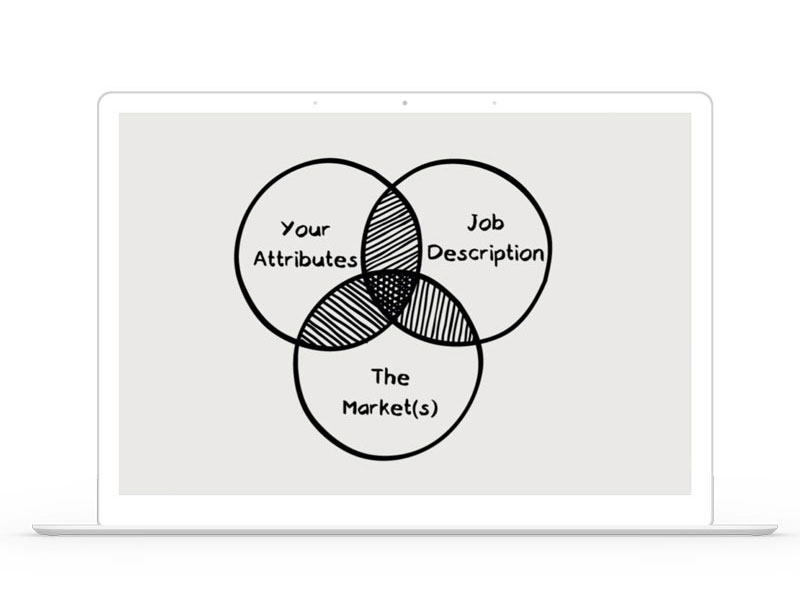
Selection criteria may not be explicitly stated in a job description, but addressing them is crucial if you are to align your application to the employer's needs, requirements, and circumstances.

  1. Your attributes: The first circle represents your (the applicant's) knowledge, achievements, and skills
  2. Job description: The second circle represents the employer's strategic and operational needs in filling the post
  3. The market: The third circle represents the broader trends and challenges facing the employer's industry

This succinctly illustrates why each senior executive CV and its accompanying documentation must be tailored to an employer's requirements, needs, and situation. Venn and the art of the CV (Bradshaw, Edwards 2022).

CV alignment with selection criteria

  • Begin with the employer's needs.

    This vital process entails deeply considering the employer's selection criteria. Understanding their demands allows us to precisely tailor your application to meet their expectations."
  • Your attributes versus their needs.

    We evaluate how your qualities, experience, and achievements align with the employer's selection criteria. This review guides our approach to accentuate your strengths and address or downplay any weaknesses, ensuring your application is best positioned.
  • Starting Your CV

    The groundwork of your application is laid here with the creation of your CV's first draft. Utilising insights from earlier steps, we showcase your achievements, skills, and experience in a pitch crafted for the role.
  • CV review and refinement

    Next, we carefully review and enhance your CV, focusing on crafting a narrative that aligns closely with the employer's requirements. Each aspect is examined to ensure optimal alignment and a compelling pitch.
  • Supporting documents and social media.

    We prepare requested supporting materials like cover letters and answers to questions. We also create or fine-tune your social media presence to ensure it reflects a consistent and professional image, further supporting your application.
  • Application submission.

    This final phase is where you submit the carefully curated and error-free application to the potential employer, ensuring it adheres to all specifications. This is designed to maximise your likelihood of being called for an interview.
This holistic approach aims to boost your success in securing interviews by meticulously aligning your profile with employer expectations and weaving a persuasive story of your skills and experience. Although our strategy adapts to each client's unique needs, this outline showcases our core methodology. In situations without a specific job target, we apply sector-wide or role-specific criteria to tailor your application, ensuring broad relevance and appeal. Nonetheless, this broad-stroke approach may not be as effective for executive positions, which require bespoke applications.

Aligning your CV

Tailor your CV to the prospective employer's specific needs and demonstrate how your accomplishments align with their requirements. Providing concrete examples with metrics strengthens your case and enhances your chances of securing an interview.

  1. Your attributes: The first circle represents your (the applicant's) knowledge, achievements, and skills
  2. Job description: The second circle represents the employer's strategic and operational needs in filling the post
  3. The market: The third circle represents the broader trends and challenges facing the employer's industry